Thermal Power Plant Simulation Software
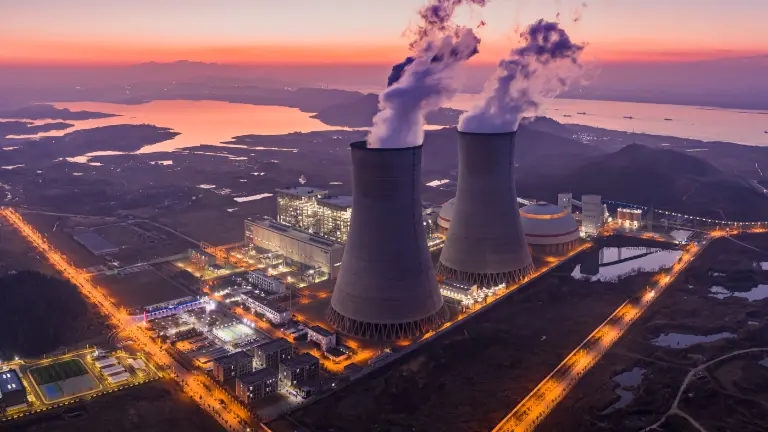
Thermal power generation projects face increasingly demanding requirements: volatile fuel prices, greater operational flexibility, and stricter environmental regulations. Whether you are planning a new plant, upgrading existing assets, or analyzing operational performance, accurate heat and mass balance simulation is essential.
SimTech’s Integrated Process Simulation Environment, IPSE, enables engineers to rapidly build robust heat and mass balance models, evaluate plant performance, analyze off-design characteristics and compare design options, and support operational decisions. From conceptual design and detailed plant design to acceptance test evaluation and operational optimization, IPSE supports the full lifecycle of thermal power projects through a transparent and flexible modelling approach. Thanks to its unified framework, these capabilities are available both in the desktop software IPSEpro or the web-based service IPSE GO.
How Thermal Power Plants are Modeled Using IPSE
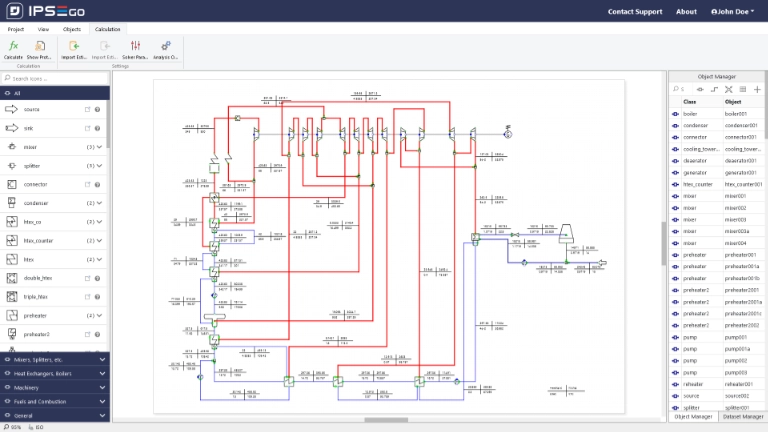
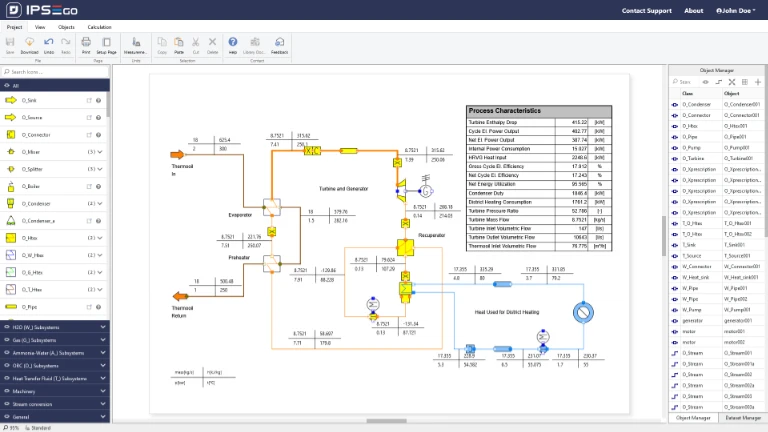
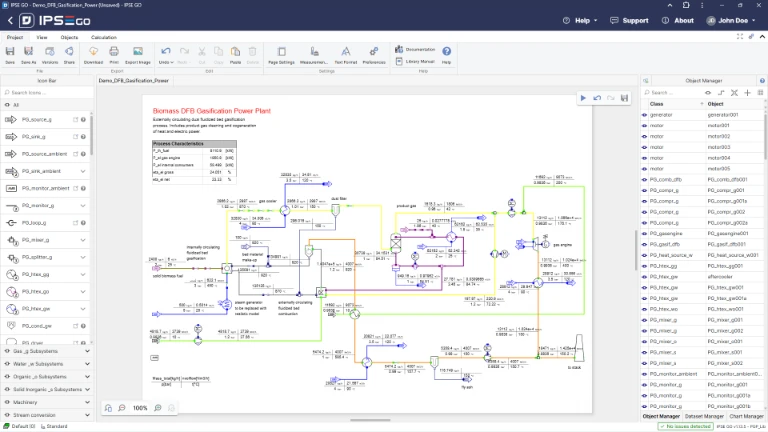
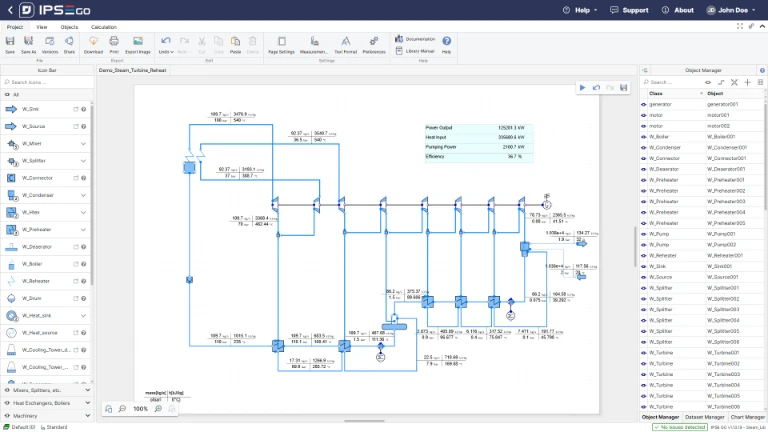
Models in IPSE are based on the concept of individual components, where you assemble models graphically from icons representing components like turbines, heat exchangers, etc. The advantage of this approach is that you are not limited by predefined plant configurations. It allows you to model and analyse all major thermal power generation technologies, including steam power plants, combined-cycle plants, gas turbine systems, and cogeneration facilities. Below you see a small selection of plant models that have been created using IPSE.
Conventional Steam Power Plant
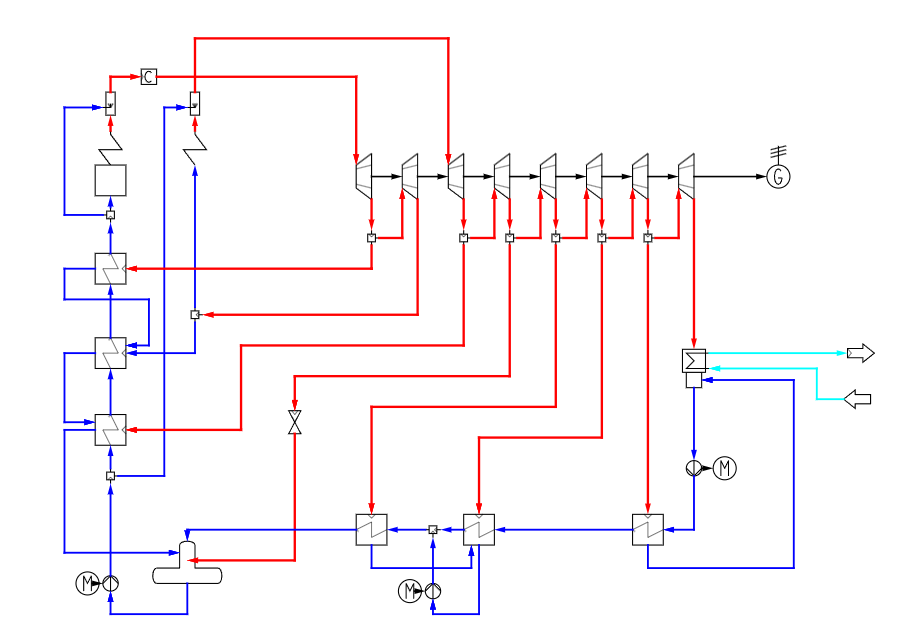
Model of a conventional steam power plant with boilers, steam turbine, condenser and feedwater system
Combined Cycle Power Plant
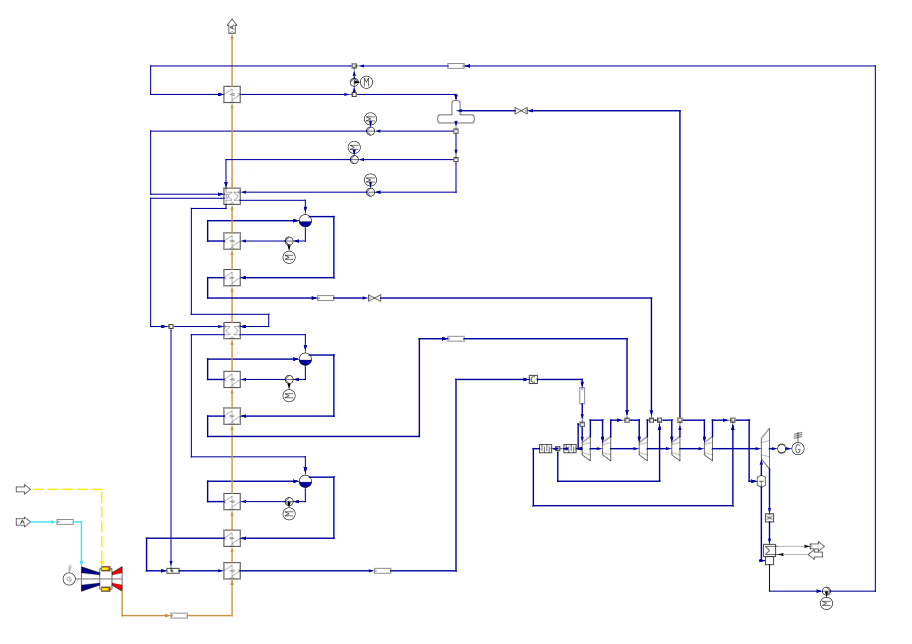
Combined-cycle power plant with gas turbine, heat recovery steam generator (HRSG) with three pressure levels and steam turbine
Cogeneration System
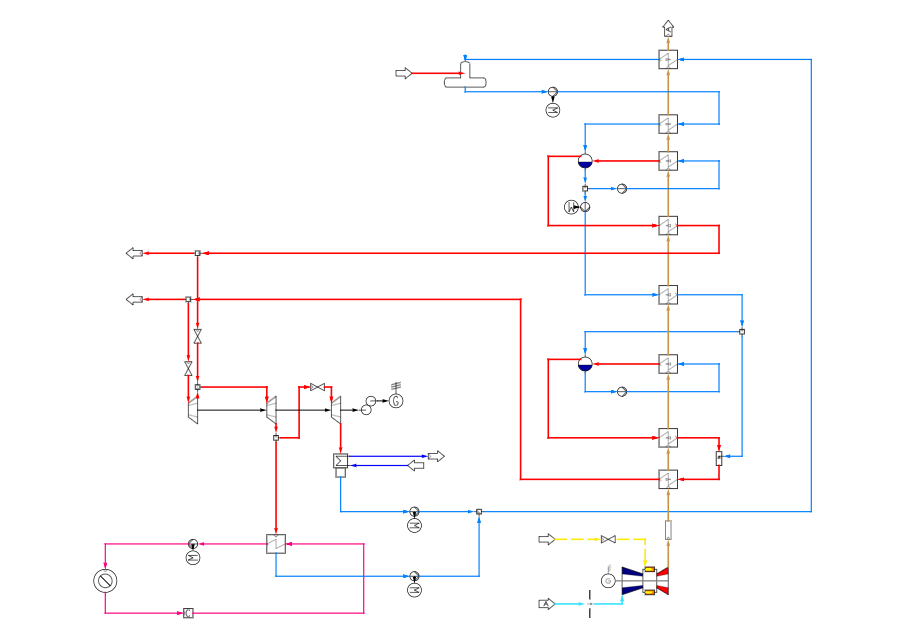
Combined cycle cogeneration plant with district heating and export of steam at two pressure levels to external consumers
How Is Heat and Mass Balance Software Used in Thermal Power Plant Engineering?
A heat and mass balance model is a key engineering tool for the design and optimization of thermal power plants. These models represent the thermodynamic behaviour of the plant and allow engineers to predict system performance under a wide range of operating conditions.
During early project phases, simulation models help engineers verify whether performance targets can be achieved and evaluate critical design choices, including:
- HRSG configuration
- steam cycle parameters
- condenser pressure
- equipment sizing
- auxiliary system integration
During commissioning, plant upgrades, and operation, accurate simulation models help engineers:
- identify operational limits
- analyze system constraints
- determine optimal operating points
- evaluate part-load behaviour
- assess the impact of changing boundary conditions such as ambient temperature, fuel composition, export steam demand, and emission constraints.
Benefits of Using IPSE for Power Plant Simulation
IPSE provides a flexible and transparent simulation environment tailored to the needs of power plant engineers:
- equation-oriented modelling approach
- detailed thermodynamic cycle simulation
- flexible component modelling
- powerful solvers for complex plant models
- scalable models from design studies to operational analysis
These capabilities make IPSE a powerful tool for thermal power plant design, performance analysis, and lifecycle optimization.
Models developed in IPSEpro can also be deployed to IPSE GO, enabling collaboration, reporting, and operational analysis in a browser-based environment.
Frequently asked questions
Industrial plants often have very specific layouts. Can I model such plants with IPSE?
Yes. Since plant models in IPSE are based on the arrangement of individual components, you have the flexibility to build a model that matches your layout. You are only limited by the components available in the model library you are using, but this limitation can also be overcome by creating your own components with IPSEpro's Model Development Kit. This option is not available in our cloud-based system, IPSE GO.
Is it possible to calculate the off-design behaviour of a plant and to carry out a part-load analysis?
Yes. Each component includes a design model and off-design models. IPSE also supports the concept of datasets, where off-design cases are represented as additional datasets. This makes it possible to evaluate multiple off-design configurations using the same model.