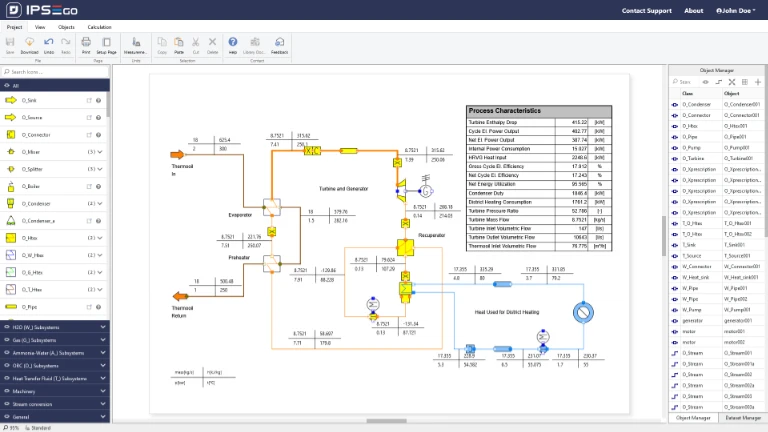
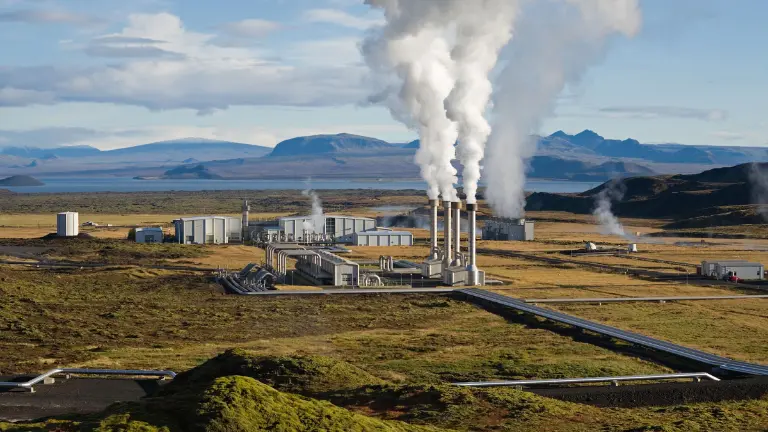
Geothermal energy is a clean, renewable and essentially inexhaustible source for heat. In geothermal power generation, plant design is largely determined by site-specific resource conditions such as brine temperature and flow rate, salinity, non-condensable gases, scaling and corrosion risks, reinjection requirements, and ambient conditions.
Because geothermal resources typically provide moderate temperatures, efficiency is inherently limited and plant performance depends strongly on selecting an appropriate process layout and minimizing thermodynamic losses. Binary cycle plants are therefore widely used, where heat from the geothermal fluid is transferred to a secondary working fluid, enabling efficient power generation from lower-temperature resources while protecting equipment from aggressive brine.
SimTech’s Integrated Process Simulation Environment (IPSE) support the design, performance analysis, and optimization of geothermal power plants by allowing engineers to evaluate different process configurations, working fluids, and operating conditions.
Organic Rankine Cycle (ORC)
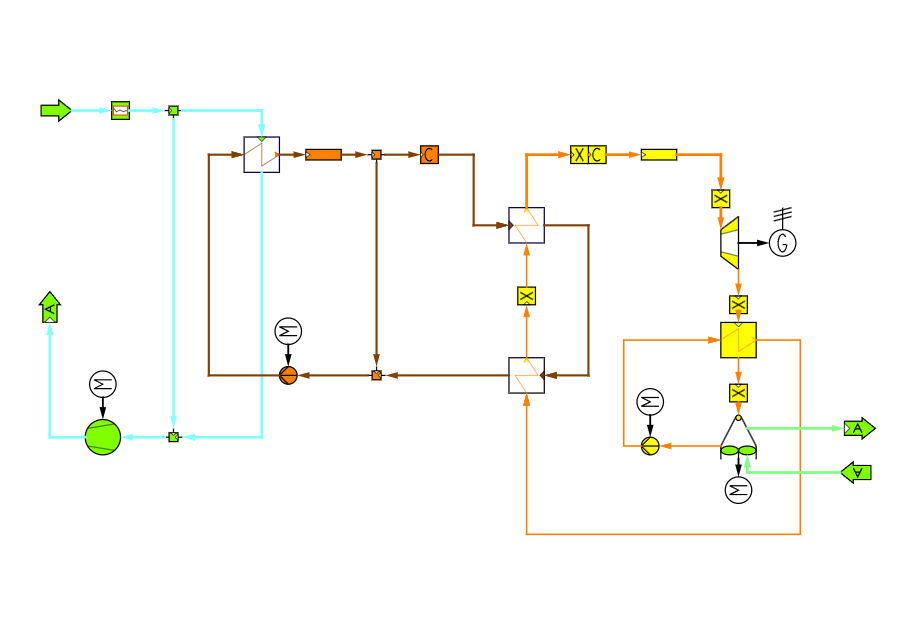
In ORC cycles heat from the geothermal fluid is transferred to an organic working fluid via heat exchangers. This enables efficient power generation from low-to-medium temperature resources while keeping the turbine and core equipment isolated from brine chemistry.
Kalina Cycle
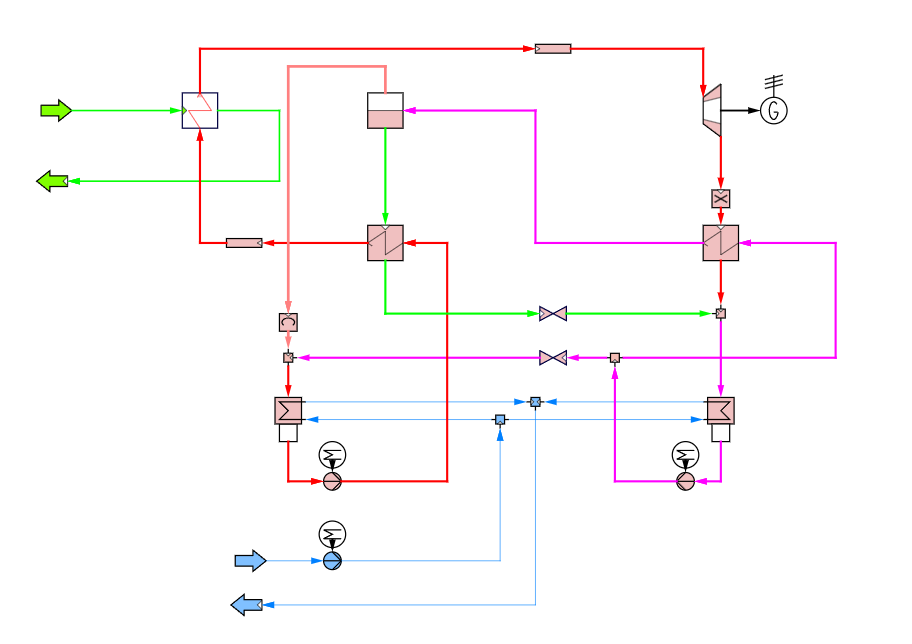
In Kalina cycle plants the geothermal heat is used to drive an ammonia–water working fluid mixture. By varying the mixture composition and evaporation/condensation characteristics, Kalina-type concepts can be tailored to specific resource temperature profiles and, in some cases, improve heat match and net power output compared with simpler layouts.
Performance modelling for design and optimization
Accurate performance models are essential to evaluate geothermal concepts at early project stages and to de-risk later design decisions. Key questions include:
- What is the expected net power output and conversion efficiency for the site conditions?
- How do wellhead temperature/flow, pressure losses, and non-condensables impact turbine and condenser performance?
- Which cycle layout (flash stages, recuperation, superheating, multi-pressure ORC, etc.) provides the best trade-off between power, complexity, and operability?
- What are the optimal working fluid and pressure levels for binary plants, considering pinch points and heat exchanger approach temperatures?
- How do cooling options (air-cooled vs water-cooled) and ambient temperature affect annual energy yield?
IPSEpro for geothermal power generation
IPSEpro is an ideal tool for creating performance models of geothermal power plants across the full range of plant types, from steam and flash systems to binary cycles and integrated heat-and-power configurations. Its flexible modelling approach supports detailed heat and mass balance calculations, equipment performance representation (turbines, pumps, heat exchangers, condensers), and scenario analysis over varying boundary conditions. This enables engineers to compare alternatives on a consistent basis, identify the most promising process layout for a given geothermal site, and build a robust model foundation for design, optimization, and operational studies.